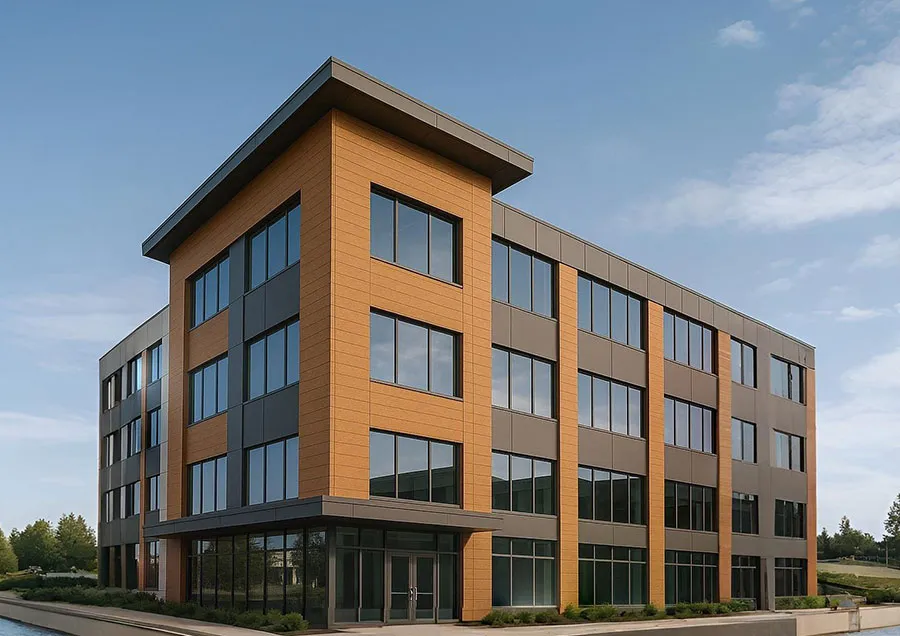
Can Wooden ACP Sheets Replace Traditional Timber in Exterior Cladding?
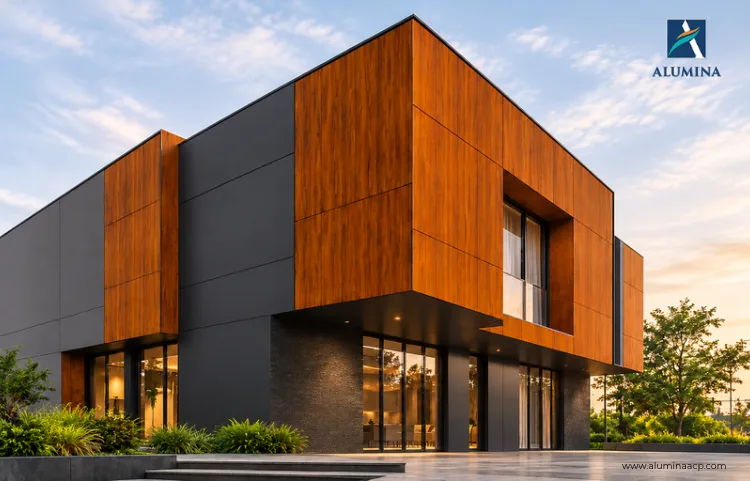
Everyone loves the look of wood on a building. But does everyone love maintaining it?
What happens when the finish starts fading? How often will the timber need refinishing? And is natural wood really the most practical choice for a large commercial facade exposed to India’s changing weather? These questions are making architects and builders rethink traditional timber cladding.
Wooden ACP Sheets offer an interesting alternative. They bring the warmth and visual character of wood without relying on solid timber for the entire exterior surface. But can they genuinely replace traditional wood? And where does the comparison become more interesting?
What Are Wooden ACP Sheets?
Wooden ACP sheets are aluminium composite panels with decorative finishes designed to reproduce the appearance of natural wood. A typical ACP consists of two aluminium skins bonded to a core material, with the exact construction and core composition varying by product.
Wood-inspired finishes can create the visual effect of timber without using solid wood as the main cladding material. For exterior applications, buyers must select panels with appropriate coatings, fire-performance characteristics and installation specifications.
Wooden ACP vs Traditional Timber: What Really Changes?
Both of these materials can produce stunning exteriors, but they do have some differences in the way they deal with the weather, installation, maintenance, and long-term expectations. Knowing and understanding what each material can do can be helpful in determining which option would suit your needs best.
1. The Wood Look Without the Wood Problems?
The attractiveness of natural wood is difficult to contest. Its grain, colour variation and texture make its quality unique. However, it reacts to the external environment. Humidity, sunlight, and the temperature influence its appearance. So the type of timber and treatment may need regular refinishing of external cladding installations.
However, the wooden ACP Sheets are a completely different story.
They replicate wood look patterns on composite panels while providing architects with a uniform visual appearance on wider facades, which is actually not natural timber but an alternative to all the projects that would like to have the wood-like visual nuance while not using it.
2. Rain, Sun and Everything in Between
An exterior wall in Mumbai deals with a very different climate from one in Jaipur. One faces heavy monsoon exposure. The other experiences intense summer heat. Traditional timber requires careful species selection, treatment and detailing to perform under such conditions.
Exterior-grade Wooden ACP Sheets can offer another option, particularly when supported by suitable weather-resistant coatings. However, not every wood-finish panel is designed for outdoor use.
Architects should check UV resistance, coating specifications, panel construction and the manufacturer’s exterior-use recommendations. Because a beautiful wood texture is worth very little if the finish cannot handle the weather.
3. Less Weight, More Design Freedom
Want a wood-look feature across several floors of a commercial building? Now think about handling and installing all that timber. Material weight, supporting frameworks and installation time can affect the project budget.
ACP panels are generally lightweight compared with many traditional solid timber cladding arrangements. They can also be fabricated into clean architectural forms. This makes them worth considering for entrance features, facade highlights, soffits and decorative wall sections. But lightweight doesn’t mean installation can be improvised. Wind loads, panel fixing, supporting structures and movement allowances still need proper engineering.
4. Maintenance Is Where the Conversation Changes
The day a facade is completed, everything looks impressive. The real question is what happens five years later. Traditional exterior timber may require cleaning, inspection and refinishing, depending on exposure and treatment. Wooden ACP cladding generally doesn’t require the same periodic wood staining or polishing.
That can reduce certain maintenance demands for commercial properties. However, ACP isn’t maintenance-free. Panels still need appropriate cleaning, inspection and attention to damaged coatings or joints. For property owners, the sensible comparison is not simply the initial material price. It’s the cost of keeping the facade presentable throughout its intended service life.
5. One Wood Look, Multiple Architectural Styles
Natural timber provides a unique look and feel, but attaining colour uniformity around larger commercial buildings may necessitate significant selection and finishing work. Wooden ACP Sheets allow for more effective decorative options.
Teak finishes add warmth to the entry of any space, while dark wenge shades complement modern glass facades. Oak-pattern covering looks good in light and dark shades. The architect will have to create a contrast effect without losing the wood feel of the building.
Why Choose ALUMINA Wooden ACP Sheets?
Alumina ACP offers wood-inspired finishes for contemporary architectural projects, with selected products specified for exterior and interior applications.
The collection includes:
- Teak, Oak, Pine and Wenge-inspired designs
- Multiple natural wood-grain patterns
- PVDF-coated exterior-use options
- Standard sheet widths of 1220 mm
- Length options of 2440, 3050 and 3660 mm
- Different thickness options for project requirements
- Product specifications and sample support
The Better Choice Depends on the Building
Wooden ACP Sheets can replace traditional timber in many decorative exterior cladding applications, but not every application. For commercial facades where consistent appearance, easier handling and lower refinishing needs matter, they deserve serious consideration. Natural timber still has its place. Explore the Alumina ACP catalogue to discover wooden finishes and choose the right cladding option for your next architectural project.
Frequently Asked Questions
Yes, wooden ACP sheets can replace natural timber in selected non-structural decorative cladding applications, provided the panels and installation system meet the project's requirements.
Exterior-grade wooden ACP panels may be designed for weather exposure, but the performance of the façade depends on the coating, joints, fixing system and drainage detailing. The complete installation should not be assumed waterproof solely because ACP is used.
Yes. Wooden ACP sheets require appropriate cleaning and periodic inspection, although they generally do not need conventional timber staining or polishing.
Suitability depends on the product's fire classification, core composition, the complete cladding assembly and applicable building regulations. It must be assessed for the specific project.
Alumina's published wooden ACP product pages list a 1220 mm width and lengths of 2440, 3050 and 3660 mm, with thickness options varying by product and order requirements.

Leading ACP Sheet Manufacturer
As a proud representative of Alumina ACP, a premier manufacturer of Aluminum Composite Panels, I bring a wealth of expertise in acp sheets and addressing diverse architectural needs with innovative solutions. Join me on this journey of exploration and discovery!