ACP Sheet Selection Guide: 5 Technical Specifications That Matter More Than Price
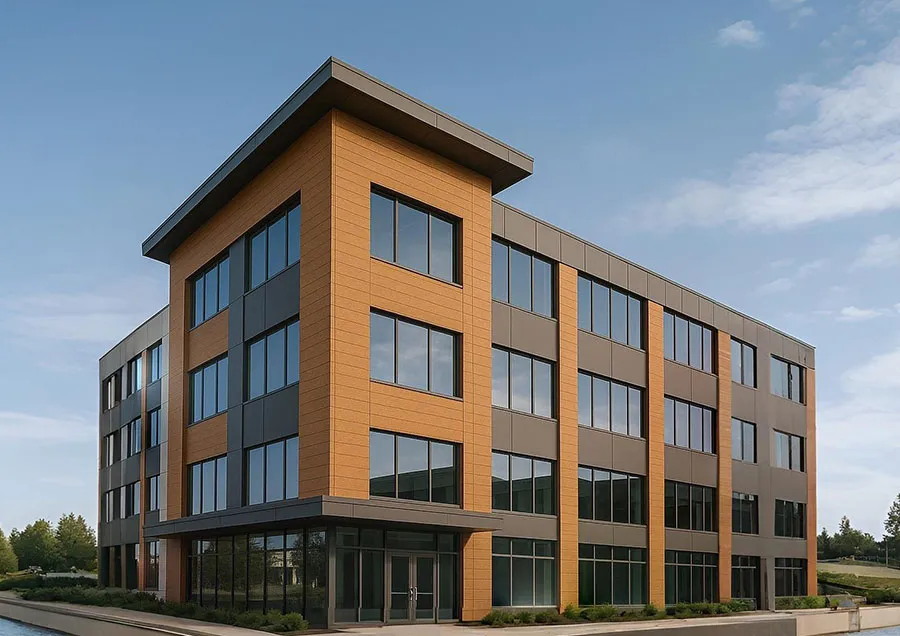
Two ACP samples can look almost identical on a table.
Same colour. Similar finish. Similar thickness.
Yet after a few years on a building, one may still look sharp while the other starts showing fading, surface variation or installation issues. That is why comparing ACP Sheets only by price can be misleading.
For architects, facade consultants, contractors and project owners, the more important question is:
What exactly are you getting for that price?
A lower quotation may save money during procurement. But if the panel is unsuitable for the application, difficult to fabricate or unable to handle long-term exterior exposure, those savings can disappear quickly through maintenance and replacement.
Before approving an ACP Sheet, these five technical specifications deserve closer attention.
A Good ACP Comparison Starts with the Specification Sheet
Do not compare two products simply because both are called “4 mm ACP.” Thickness is only one part of the equation. Panel dimensions, coating system, construction, weather performance and fabrication requirements all influence how the material performs after installation.
1. Panel Thickness: More Is Not Automatically Better
The first number buyers usually compare is thickness. But selecting the thickest option without considering the application is not necessarily a better specification.
A small interior feature, signage element and large external facade do not face the same structural or fabrication demands.
Choose ACP Sheet options that include 3 mm, 4 mm and 6 mm thicknesses, with standard widths of 1220 mm and lengths of 2440 mm, 3050 mm and 3660 mm. Special lengths and thicknesses can also be considered depending on project requirements.
Before finalising thickness, ask:
- Where will the panel be installed?
- How large are the facade modules?
- Will the panel need bending or routing?
- What support system will be used?
- Is the application interior or exterior?
Thickness should follow the design and application not simply the habit of using the same specification everywhere.
2. Understand What Is Inside the ACP Sheet
The decorative surface gets attention. The internal construction does the real work.
An ACP Sheet is typically built as a layered system. The panel construction should include protective film, high-strength aluminium foil, adhesive layers, a mineral core, back coat and PVDF coating layers.
Why should a project team care about this?
Because two panels with the same overall thickness may not necessarily have the same internal construction or intended performance. When evaluating products, do not stop at:
“Is this 4 mm?”
Ask what makes up those 4 mm.
The composition can influence rigidity, fabrication, durability and suitability for different facade applications.
3. Coating Technology Matters More Than the Colour Name
Clients may spend an hour deciding between two shades of grey. The technical team should spend time understanding what protects that grey. Exterior cladding deals with:
- UV exposure
- Rain
- Dust
- Heat
- Seasonal weather changes
- Regular cleaning
Look for ACP sheets that include PVDF top and base coats with UV resistance, chemical and weather resistance, waterproof characteristics, and anti-fading technology.
That becomes particularly important on large elevations. A slight change in finish across a small panel may go unnoticed.
4. Dimensional Tolerance Can Affect the Finished Elevation
Here is something that rarely appears in architectural renders:
A panel that does not line up properly.
Across hundreds of facade modules, even relatively small dimensional variations can influence joint alignment and installation quality.
Evaluating the technical information specifies tolerances for width, length, thickness, squareness and bow.
For example, panel thickness tolerance is listed at ±0.2 mm, with coil thickness tolerance of ±0.03 mm. Squareness is specified at a maximum of 5 mm, while bow is limited to a maximum of 0.8% of width and/or length.
These numbers may not sound exciting during procurement. They become much more interesting when the installer is trying to maintain clean joints across an entire elevation.
5. Weather Resistance Should Match Where the Panel Is Going
An interior reception wall and a west-facing external facade should not be judged by the same performance criteria. Exterior ACP Sheets may experience direct sunlight, heavy rain, wind and fluctuating temperatures for years.
That is why weather-related performance deserves attention before price negotiation.
The product range identifies several exterior-oriented properties, including:
- UV resistance
- Anti-weather resistance
- Waterproof performance
- Chemical resistance
- Anti-fading technology
- Easy-clean surfaces
Why Choose Alumina ACP Sheet?
A strong specification needs options.
ALUMINA offers ACP Sheet solutions across multiple grades, thicknesses and finish families, allowing architects and contractors to select according to application rather than forcing every project into one configuration.
The range includes:
- 3 mm, 4 mm and 6 mm panel thicknesses
- Standard 1220 mm width
- 2440 mm, 3050 mm and 3660 mm lengths
- Special size customisation possibilities
- PVDF-coated construction
- Anti-fading technology
- UV and weather resistance
- Wood, marble, metallic, solid, glossy, mirror, brush, stone, velvet and sand finishes
- 10-year warranty
Compare What the Building Will Get, Not Just What Procurement Will Pay
Price is easy to compare because it fits neatly into one column. Performance does not.
Before selecting an ACP Sheet, look at thickness, construction, coating, dimensional consistency and weather suitability together. Because the best-value panel is not necessarily the one with the lowest quotation. It is the one you can specify confidently today and do not have to replace tomorrow. Explore ALUMINA’s curated catalogue of ACP sheets today.
Frequently Asked Questions
The most important specification depends on the application, but for exterior facades, PVDF coating quality and weather resistance are usually more critical than colour or price.
No. The correct thickness depends on whether the application is interior, signage, or exterior cladding, along with panel size and support conditions.
PVDF coating helps improve UV resistance, colour retention, weather resistance, and long-term exterior performance, reducing the risk of fading and surface deterioration.
Architects should review panel thickness, internal construction, coating system, dimensional tolerances, fabrication suitability, and weather-performance specifications before final approval.
Yes, ACP Sheets designed with PVDF coatings, UV resistance, waterproof properties, and weather-resistant construction are commonly used for exterior facades in Indian climatic conditions.

Leading ACP Sheet Manufacturer
As a proud representative of Alumina ACP, a premier manufacturer of Aluminum Composite Panels, I bring a wealth of expertise in acp sheets and addressing diverse architectural needs with innovative solutions. Join me on this journey of exploration and discovery!