What Architects Look for When Specifying ACP Sheets
Every architect knows that choosing a facade material is rarely just a design decision.
At the concept stage, the focus is exciting. But as the project moves closer to execution, another set of questions begins.
- Will the material handle years of sun and rain?
- Can the fabricator achieve the details shown in the drawings?
- Will the finish remain consistent across a large elevation?
- And will the client still be happy with it five or ten years after handover?
That is where ACP Sheets need to be evaluated beyond appearance. A beautiful sample may win attention in the meeting room, but architects are ultimately specifying thousands of square feet of material that must perform on an actual building.
So before choosing a colour or finish, here are the factors architects usually examine more closely, from thickness and coatings to fabrication flexibility and long-term performance.
A Beautiful Sample Is Only the Beginning
Architects are not choosing a panel for a sample board. They are choosing a material that may cover thousands of square feet and remain part of the building for years. That means appearance, construction, exposure, and execution all need to work together.
1. First Question: Where Is the ACP Sheet Going?
Start with the application. A reception feature wall and an exterior facade should not automatically receive the same specification. An architect first needs to understand:
- Interior or exterior application?
- How much sun and rain exposure?
- Flat facade or complex geometry?
- Large uninterrupted elevations or smaller accents?
- Easy maintenance access or difficult-to-reach zones?
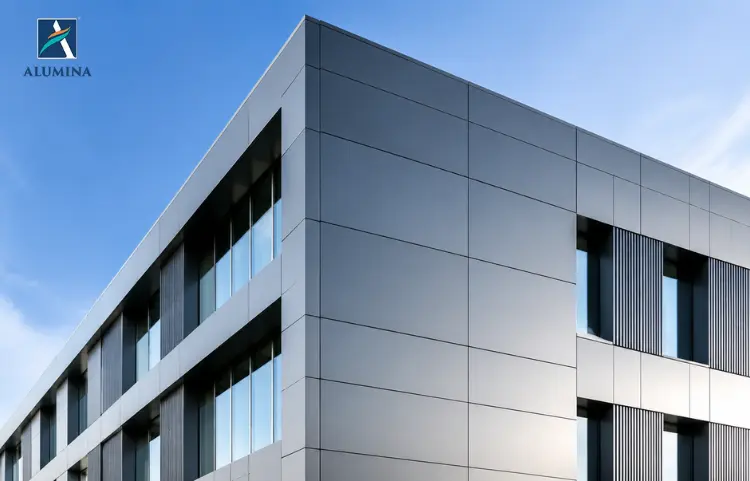
ACP construction typically combines two aluminium sheets around a core, creating a lightweight sandwich panel suitable for contemporary cladding applications. The product information supplied for these panels also highlights weather resistance, UV resistance, easy installation and design flexibility.
The right specification begins with what the building will ask the material to do.
2. Thickness Should Follow the Design, Not Habit
It happens surprisingly often.
Someone says:
“We always use 4 mm.”
But should every facade be specified the same way?
A small architectural feature, signage application, and large exterior elevation can have very different requirements.
Available ACP configurations include 3 mm, 4 mm and 6 mm thicknesses, with a standard width of 1220 mm and lengths of 2440 mm, 3050 mm and 3660 mm. Variable lengths and thicknesses can also be considered for special requirements.
3. The Colour Is Visible. The Coating Does the Hard Work.
A client may spend twenty minutes comparing two shades of grey. The architect should spend just as much time asking what protects that grey. Exterior surfaces face sunlight, rain and changing weather every day. If the finish deteriorates, even excellent architecture can begin looking tired.
The ACP construction shown in the supplied technical information includes protective film, aluminium layers, adhesive layers, a core and PVDF top and base coats. Performance features also include UV resistance, weather resistance and anti-fading technology.
So when reviewing an exterior ACP Sheet, do not stop at:
“Is this the right colour?”
Ask:
“How is this finish designed to retain that colour?”
That is a much more useful architectural question.
4. Architects Need Enough Finishes to Design
Sometimes the design asks for warmth. Sometimes it needs the weight of stone. Sometimes the building demands a clean metallic identity. Specifying ACP does not have to mean covering everything in silver or grey. Available surface families include
- Wood
- Marble
- Metallic
- Solid
- Glossy
- Mirror
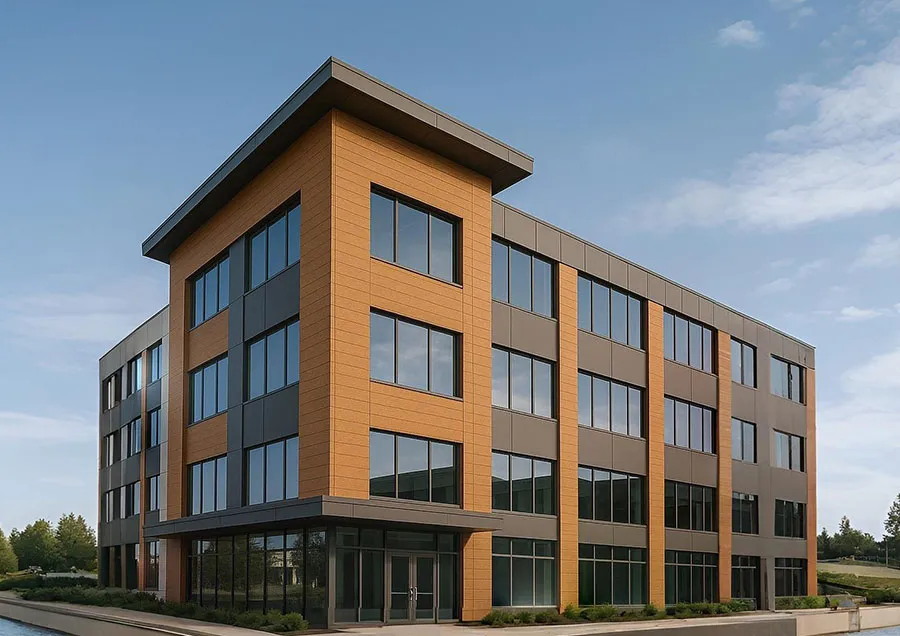
That opens very different architectural possibilities. A wood-look finish can soften a glass-heavy elevation. Stone-inspired surfaces can visually anchor a building. Metallic finishes can reinforce a corporate identity. Solid colours can create sharp geometric blocks. The goal is not to use more finishes.
5. Ask the Fabricator Before the Site Forces a Compromise
There is a painful moment in many projects. The architect creates a strong detail. The site team studies it. Then someone says:
“We can't execute it exactly like this.”
Sharp corners, boxed projections, curved elements and complex facade patterns all depend on fabrication. This is where the lightweight and fabrication-friendly nature of ACP becomes useful. The product properties include ease of installation, lightweight construction and design flexibility.
But flexibility does not mean detailing should be left until the last minute.
Architects should coordinate panel dimensions, joints, folds and fixing requirements with the fabricator before drawings become difficult to change.
Quick Reference: What Architects Usually Check in an ACP Sheet
| Specification Factor | Why It Matters |
| Application area | Determines interior or exterior suitability |
| Panel thickness | Affects rigidity and structural performance |
| PVDF coating | Improves UV and weather resistance |
| Surface finish | Supports the architectural design intent |
| Fabrication flexibility | Allows folds, curves, and complex details |
| Colour consistency | Maintains a uniform facade appearance |
| Maintenance requirements | Reduces long-term operating costs |
Why Choose Alumina ACP Sheet?
Alumina ACP Sheet gives architects room to specify around the project rather than forcing every project into the same material choice. Architects choose Alumina ACP because:
- PVDF-coated construction
- Anti-fading technology
- UV and weather resistance
- Lightweight construction
- Easy-clean and waterproof properties
- Multiple grades for varied applications
- 10-year warranty
- ISO 9001:2015 and certification credentials
The Best Specification Is the One You Don't Have to Defend Later
Anyone can approve a beautiful finish. The architect's job is to ask what happens after the sample leaves the meeting room. Choose ALUMINA ACP Sheets that work with the design, the fabricator, the climate, and the years ahead. Explore our catalogue now.
Frequently Asked Questions
For exterior applications, architects usually prioritise coating quality, weather resistance, and long-term colour stability.
4 mm ACP Sheets are widely used for many exterior facade applications, although the final specification depends on the project design and structural requirements.
PVDF coating provides better resistance to UV exposure, rain, fading, and weather-related deterioration, helping the facade maintain its appearance for a longer period.
Yes. ACP Sheets are lightweight and fabrication-friendly, making them suitable for folded, boxed, and certain curved architectural details when properly engineered.
Yes. ACP Sheets are widely used in commercial buildings, offices, retail projects, hospitals, hotels, and institutional facades because they combine design flexibility with relatively easy installation and maintenance.

Leading ACP Sheet Manufacturer
As a proud representative of Alumina ACP, a premier manufacturer of Aluminum Composite Panels, I bring a wealth of expertise in acp sheets and addressing diverse architectural needs with innovative solutions. Join me on this journey of exploration and discovery!